
IMPACTS
Environmental Impacts
Positives
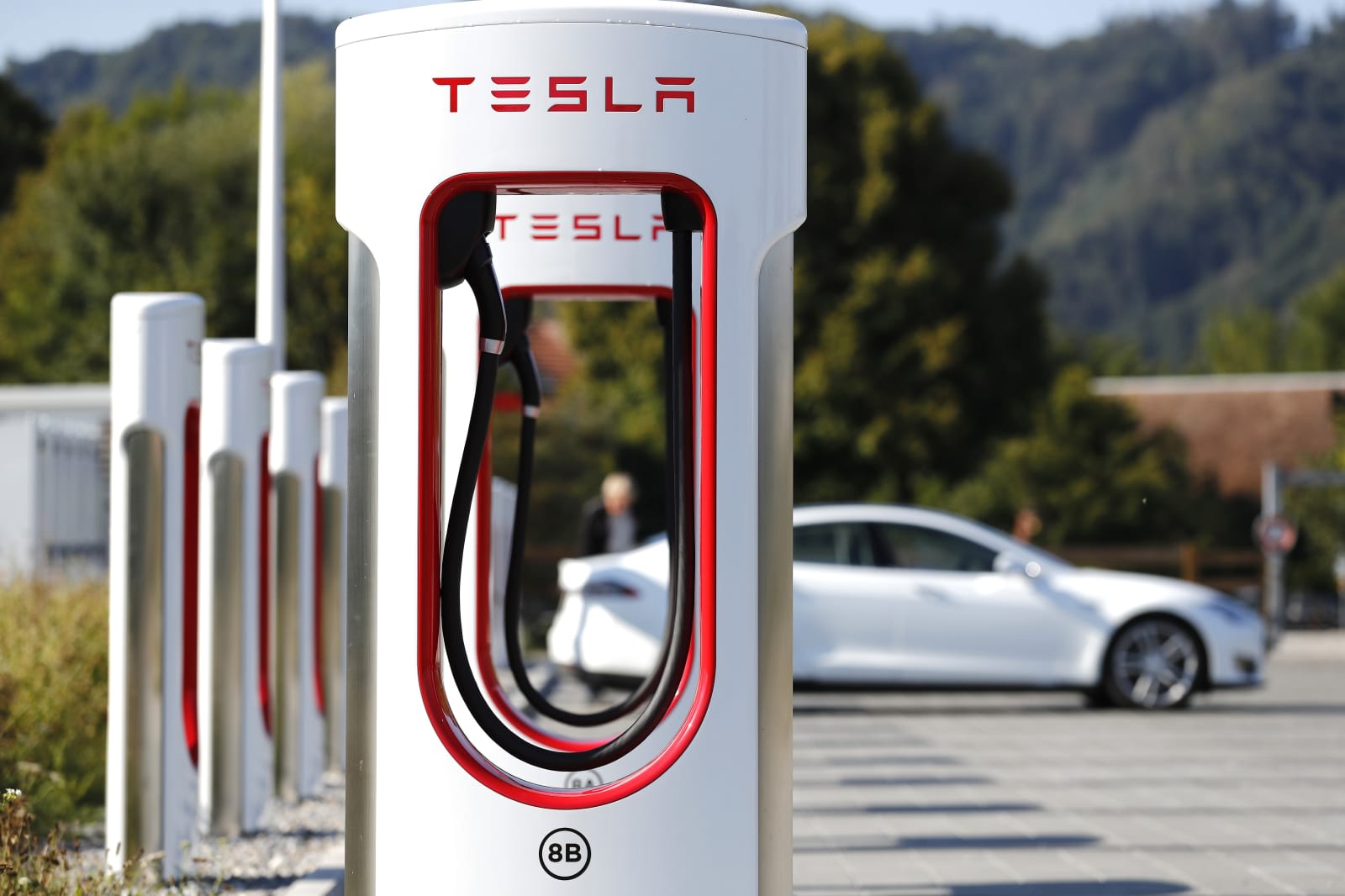 Tesla’s goal for their company, specifically towards their cars, is “to accelerate the advent of sustainable transport by bringing compelling mass market electric cars to market as soon as possible.” The Tesla Model S is the company’s leading car to represent their goal of making an electric, sustainable car future as it is a 100% electric fueled that according to Tesla has a range of 600km (meaning it can run without charge for 600km). Not only is the car a non-polluter, the materials that make up the Model S is reused. When the car has reached the end of its life cycle, instead of being thrown in a recycling bin, it is compressed into an almost sheet of metal (essentially like a crumpled paper flattened out but metal). This now thick sheet of metal can be reused to create more cars, put into use for other Tesla projects, or be sold to other automotive companies. Additionally, 30% of used Lithium-ion batteries are turned into slag(stony waste matter extracted from metal) which is then sold to metal manufacturers and cement manufacturers. By doing so, they are essentially reducing their lithium battery waste by 30% which is also an example of them reducing their CO2 emissions.
Negatives
- Jonathan Harris and his team from Engaged Tracking, a CO2 emissions company based in Britain, beg to ask the questions “Is the Tesla Model S really green?”. He compares the average petroleum car with the Tesla Model S to see the difference in CO2 emissions. The result of their experiment was that both cars released the same amount of CO2 emissions which is 1.5 tons annually. He then decided to compare the Model S to other electric cars to see if it stands out amongst them. He found that the majority of them produce fewer emissions than the Model S, making it not as green as what it is branded to be. For example, another popular electric car that goes by the name of BMW i3 shows to produce 1.3 tons of CO2 emissions annually.
- In terms of raw materials, Tesla wastes their materials. According to Business Insider, 40% of the raw materials of production gets scrapped (it goes to waste). Business Insider decided to discuss this matter with Elon Musk (the CEO of Tesla) himself in June of 2018. He defends his case firstly by stating that since January of 2018, the number of raw materials gone to waste had decreased by 60% which considering when the interview was done, this improvement was done within 5-6 months time. He also mentions that the reason why a lot of parts are put to waste is so that only the best materials are putten into making their luxury cars. However, the is seemingly unnecessary since other car companies such as General Motors or Toyota.
Societal Impacts
- Tesla Model S is not as expensive as you think. According to Investopedia, 42.25% of the car’s sales price is due to the battery. It costs around $500 per kWh and since the Model S has a 60kWh capacity, $30 000 of the sales price is due to the battery. However, a lot of well known all-electric cars have battery capacities 5-6x less than the model S. For example, the BMW i8 2019 has a capacity of 11.6 kWh and the car costs $149 000. The Model S shows to have a significantly larger battery capacity and yet maintains a lower sales price. Additionally, there are many functions other functions the Model S serves that are unique to its own and not in any other. This includes their 17” digital interface which can be a tool for the driver is a variety of ways, whether it be to check the charge of the car, work controls of the car such as the autopilot function, or even streaming Pepa Pig on the Youtube app if their child is being disobedient.
- On the note of the Model S specs, there are numerous specialties and functions the car has that will surely please all users.
- Tesla App.Tesla has a mobile app driver/user of the car that can use to function their car. What the function does is that the user can tap a button on the app and call their Model S to them so long her are in 61meters proximity. The car will autonomously drive to its driver.
- Bioweapon defence. With air pollution being a major issue in the 21st century, many drivers and/or passengers fear to suck in pollutants, bacteria and other contaminants that come into the car via heaters/air-conditioners in the car. Users of the Model S do not fret for such occasion to happen as the integrated bioweapon defence function in the car makes the chances of inhaling toxic particles nearly impossible. HEPA(high-efficiency particulate air) is the air filter Tesla uses with removes a minimum of 99.97% of toxic particles from entering the car.
- 17” Digital Interface. As mentioned in the previous fact, the Model S has an integrated tablet in the car. This replaces the area dedicated to the radio in a conventional car. Some uses of the tablet include but not limited to opening windows/doors, GPS, energy consumption, charging status, camera(can be used to see when parking) and entertainment.
- The Autopilot. The most hyped function of the Model S is the Autopilot. Two main functions of the autopilot are navigation and autopilot parking.

- How navigation works by using the 12 sensors located around the vehicle is able to detect its surroundings. After calibrating using the data gained from the sensors, the car will then be able to switch lanes, make turns and simply drive the car altogether. This is helpful for drivers who are beginners, those who struggle to make turns or simply want to relax for a quick second.
- Autopilot parking uses the same sensors to figure out how to park the car. After acquiring that data, the car parks itself. The auto parking is straightforward where those same sensors help the car park by itself.
Because of the safe performance the Model S shows to have, it has been awarded 5 stars by NHTSA(The National Highway Traffic Safety Administration) for: inside passenger, side roll driver, frontal driver, frontal passenger and overall (2019).